How to Store MTG Cards Long Term
By Dana Whitfield, MTG player since 1996 · Updated
Cards do not age badly on their own. They age badly because of four specific forces, all cheap to block. After three decades of keeping cardboard from the mid-nineties in presentable shape, here is the storage system I actually use, from the sleeve out to the shelf.
In this guide
The four enemies — what actually damages stored cards.
The layered system — sleeve, holder, box, room.
Matching protection to card value — where to spend and where not to.
The Four Enemies of Stored Cards
Pressure is the sneaky one. A tightly overstuffed box bows every card in it, a heavy stack dents whatever sits at the bottom, and a rubber band, the classic sin of nineties collections, leaves a groove that never leaves. Humidity works slower: cardboard absorbs moisture, corners soften, foils curl into the familiar taco shape. Light matters for anything displayed; direct sun visibly fades card faces within seasons, not decades. Friction is what happens every time an unsleeved card slides against a neighbor, a binder pocket, or a table, sanding the edges white one pass at a time.
The Layered System
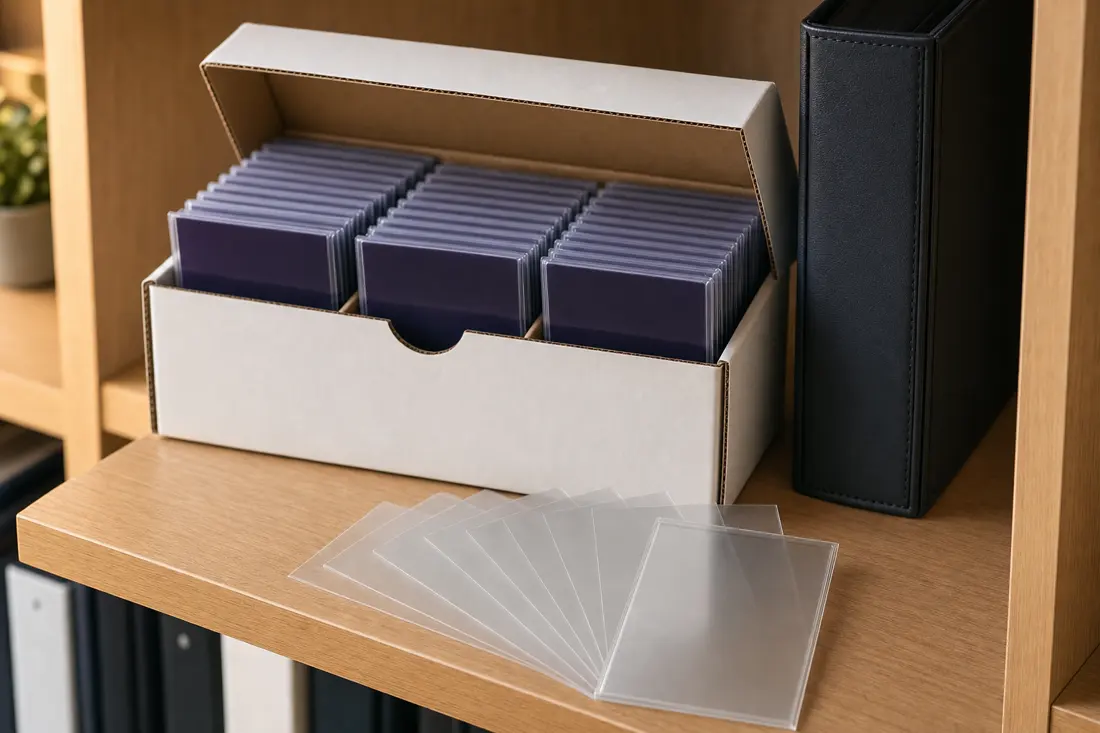
Layer one, the sleeve. A penny sleeve at 7 to 10 cents kills friction and fingerprints, and it is the layer everything else assumes. Sleeve the whole collection, not just the good cards; bulk you did not sleeve is bulk you cannot cleanly sell later.
Layer two, rigidity where it counts. Cards worth real money graduate from the box to a toploader over the sleeve, which adds bend and crush protection. Cards you play graduate instead to thicker play sleeves. The same logic gone one step further, sealing a card in two opposed sleeves, is double sleeving.
Layer three, the container. Storage boxes should be full enough that cards stand upright without slumping, and loose enough that you can lift a card out without dragging its neighbors. Binders should stand vertically on a shelf like books; stacked flat, the pages press card impressions into each other.
Layer four, the room. Interior closets beat exterior walls, shelves beat floors, and anywhere beats the attic and the basement, which trade between heat swings and damp. You are aiming for ordinary living-room conditions, stable and dark, not a laboratory.
Matching Protection to Card Value
| Card tier | Setup | Cost per card |
|---|---|---|
| Bulk and commons | Penny sleeve, storage box | 7-10¢ |
| Played decks | Play sleeves, deck box | 10-15¢ |
| Valuable singles | Penny sleeve + toploader | 45¢-$1.00 |
| Grading candidates | Full submission prep | About $1.25 |
The per-card costs above are computed from our own pack prices, 100 to 300 sleeves between $9.95 and $19.95 and combos between $24.95 and $44.95, and from the common retail range for play sleeves. The product line behind our packs carries a 4.9/5 average across 1,547 four and five star ratings and more than 10,000 units sold, per the verified buyer data cited on every product page.
Insurance for the shelf is the last layer most collectors skip. Photograph your binders page by page once a year and keep the photos off-site or in the cloud; a ten-minute camera roll session is the difference between an insurance conversation with evidence and one without. For the handful of cards that would genuinely hurt to lose, note their editions and conditions in the same folder.
Sorting habits round out the system. Handle cards over the box, not over your lap, so a dropped card falls two inches instead of four feet. Keep drinks on a different table entirely, a rule that sounds paranoid until the first near miss. And when a sorting session ends, put boxes back on the shelf the same evening; the collection that lives temporarily on the floor is the collection that eventually meets a shoe.
Two situations deserve their own paragraph. Display is the first: if a card lives framed on a wall or standing on a shelf, light exposure becomes the dominant threat, so keep displayed cards out of direct sun, rotate them seasonally, and accept that the display copy is the copy you have chosen to spend. The second is climate extremes. If your storage room swings past ordinary comfort, a sealed plastic tub with a few silica gel packets flattens the humidity curve for a few dollars, and replacing the packets twice a year is the entire maintenance schedule.
Moving a collection is the stress test most storage plans fail. Boxes packed for a shelf slide and slump in a car trunk. Before any move, top up boxes so rows cannot shift, lay binders flat in a single layer for the trip only, and carry the highest-value toploadered cards in the cabin with you rather than the truck. An afternoon of packing discipline protects years of careful storage from one pothole.
The one-sentence version of thirty years of storage: cards survive neglect badly and survive cheap systematic protection almost indefinitely. Sleeve everything once, upgrade the layers as value demands, and the collection you shelve this year opens the same way in twenty, in the same condition you left it.